
What Should Be the Size of Custom Patches?

What is the standard patch size? Every time someone starts ordering patches for the first time, this one question tends to trip them up. Something that looks okay at 800% zoom may appear a little different once it comes to stitching the patch out on the fabric.
Size depends on the function, placement, and detail level of the design. The good news is that the manufacturers have established certain narrow ranges over the years, so you wouldn’t have to reinvent the wheel.
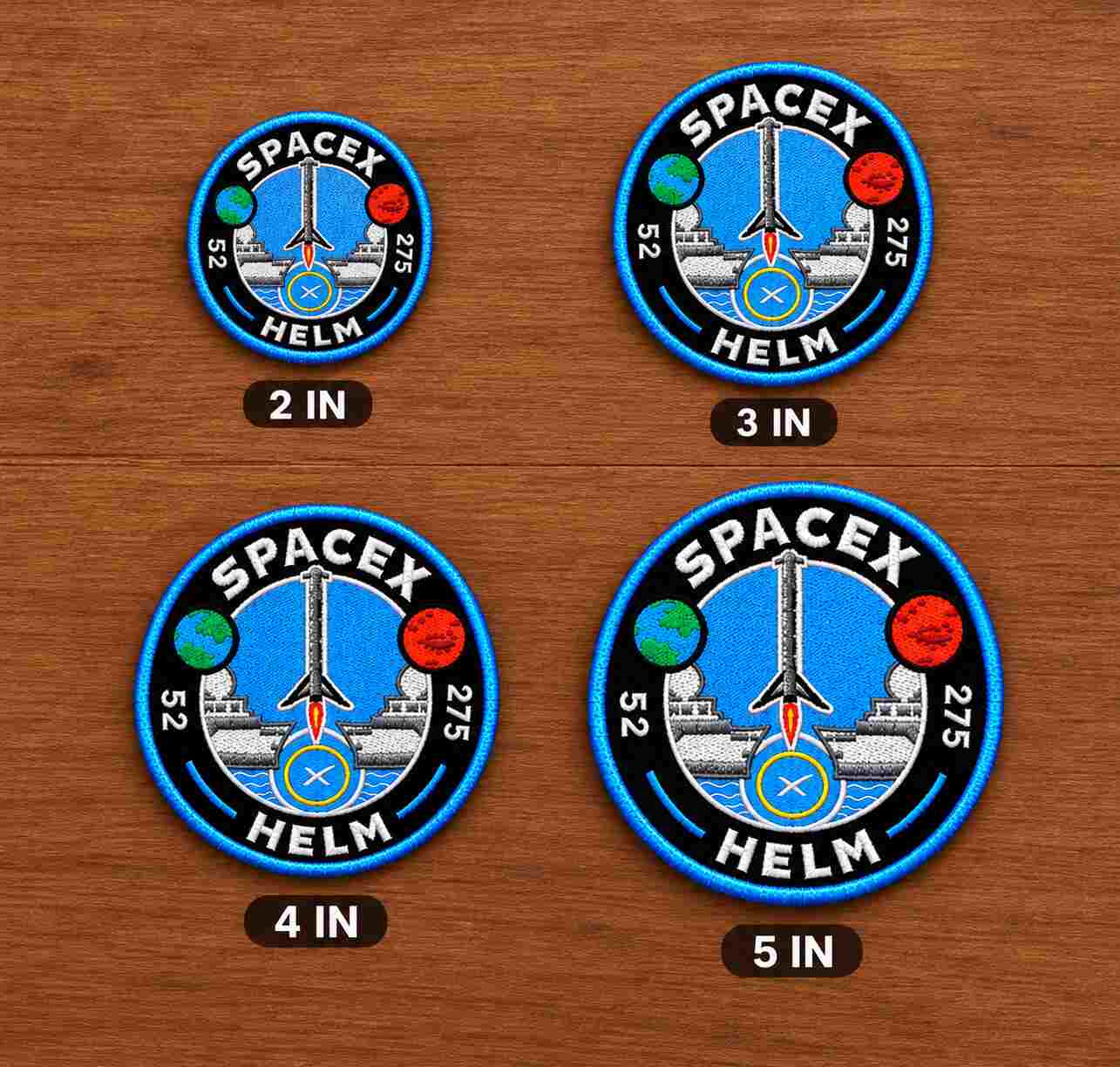
What is a Standard Patch Size?
While different shops may vary in size, the majority of them offer patches around 2-4 inches. If you were to ask ten suppliers this question, almost everyone would respond “3 inches,” hence establishing it as the standard patch size. This is big enough not to confuse text but at the same time small enough not to dominate the area of the chest or sleeve.
Go under 2 inches and fine details start disappearing. Try to move over 5, and you’re only in back-patch or statement-piece territory anymore.
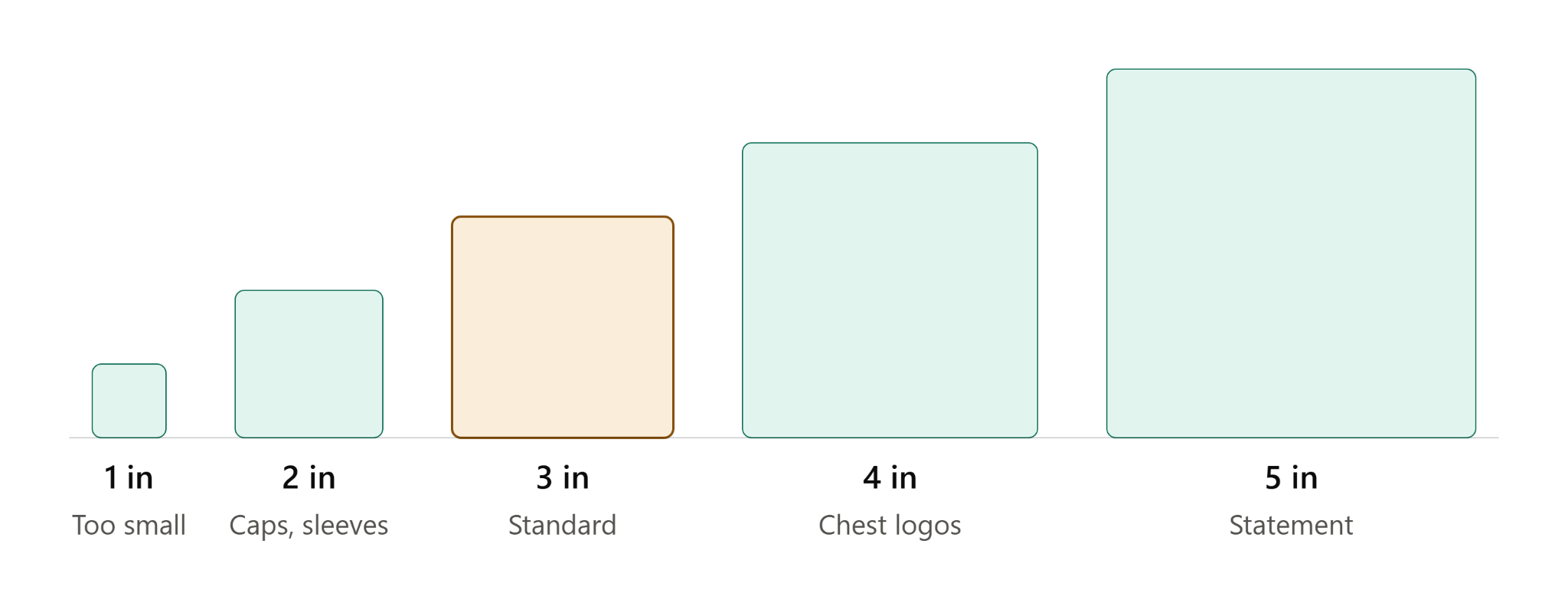
Custom Patch Size Chart
Before choosing your dimensions, it helps to have a quick reference for the most common patch sizes. The table below covers typical sizes based on patch type and placement:
| Patch Type / Placement | Recommended Dimensions | Common Use |
| Hat Patch | 2–2.5 inches | Front logos and small designs |
| Shirt Pocket Patch | 2–3 inches | Pocket logos and branding |
| Sleeve Patch | 2–3 inches | Shirts, uniforms, and jackets |
| Chest Patch | 3–4 inches | Jackets, uniforms, and workwear |
| Jeans Pocket Patch | 2–2.5 inches | Front or back pockets |
| Jeans Thigh Patch | Up to 3 inches | Larger denim placements |
| Morale Patch | 2 × 3 inches | Tactical vests, bags, and plate carriers |
| Velcro Patch | 2–4 inches | Gear, pouches, uniforms, and bags |
| Chenille Patch | 4–8 inches | Varsity jackets and large lettering |
| Iron-On Patch | 2–3 inches | Shirts, jackets, and bags |
| Embroidered Patch | 2–4 inches | Clothing, caps, backpacks, and uniforms |
| PVC Patch | 2 × 3 inches | Tactical and outdoor equipment |
| Large Back Patch | 8–12 inches | Jacket backs and statement designs |
These are common starting points rather than strict rules. The right custom patch size ultimately depends on the available space, artwork, level of detail, and type of backing or material being used.

Bring your design to life with custom patches.
Explore different patch styles, shapes, sizes and backing options for your project.
Explore Custom Patches →How to Figure Out the Right Custom Patch Size
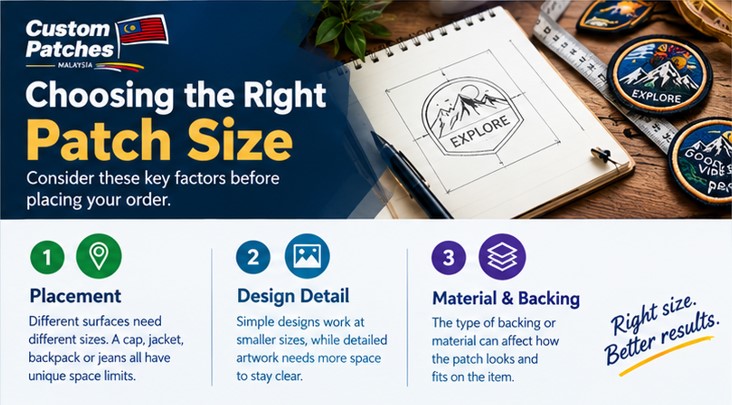
This is really three questions in one. Where’s it going, how detailed is the artwork, and what backing are you using? A simple two-colour logo can survive at 1.5 inches. A design with small text needs at least 3 inches, or the details mush together during stitching.
If you’re placing a bulk order, teams ordering custom patches usually want to lock in the custom patch size before production starts, and getting one sample made first is worth it every time. What reads fine as a flat image rarely translates 1:1 once it’s actual thread on fabric.
Compare embroidered and PVC patch options to find a style that suits your design.
Working Out Patch Size for Hat Placements

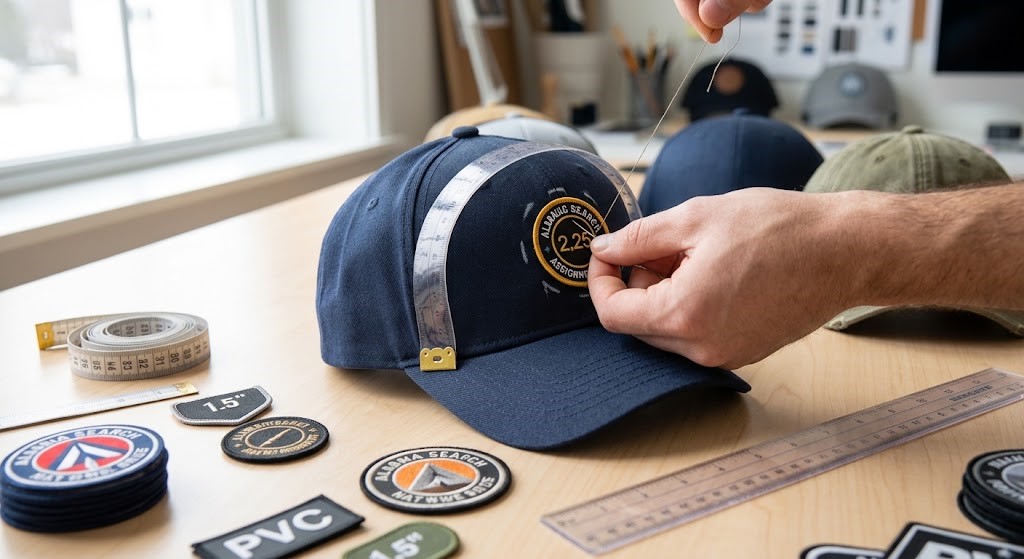
Caps are their own puzzle because the surface curves. Patch size for hat placements usually sits around 2 to 2.5 inches, and going bigger tends to warp along the panel and distort the design. 2.25 inches is what most people settle on for a front logo, visible without fighting the curve of the cap.
A lot of the custom patch size questions we get for caps are about the panel curve, not the artwork itself, so going past that patch size for hat range rarely helps.
Patch Size for Jackets: More Room, More Options
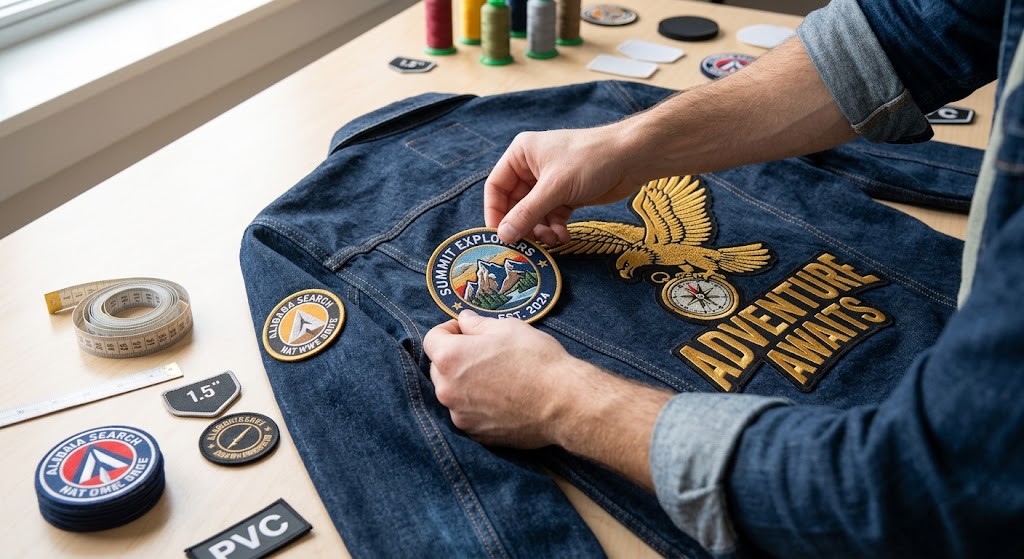
Jackets are a different game entirely. Patch size for jackets can range from small sleeve accents at 2 to 3 inches up to full back panels at 10 or even 12 inches. Chest logos tend to land around 3 to 4 inches. On denim or varsity-style jackets, people usually go bold, 5 inches and up, because the fabric can take it.
That range in patch size for jackets is also why back placements get treated so differently from sleeve work, because the fabric simply gives you more to work with.
Does Patch Size for Jeans Work the Same Way?
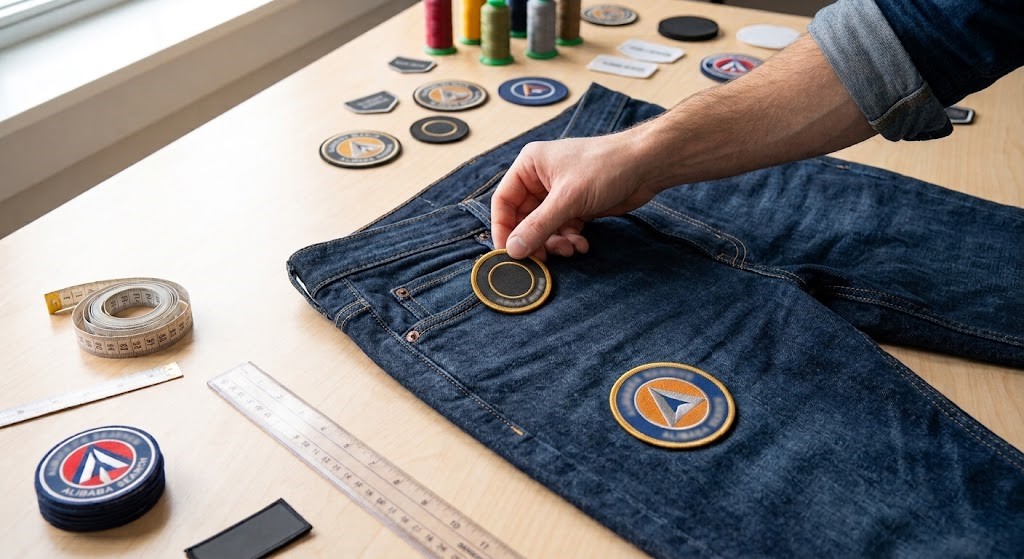
This specifically confuses people because the actual measurement can be a lot smaller than expected. Typically, the patch size for jeans will be more conservative. It can be around 2- 2.5 inches for a patch that goes on a pocket or possibly even up to 3 inches for a patch that has been placed on the thigh area. The reason behind this is the fact that denim stretches a lot more in comparison to the fabric used for a jacket. This means that keeping the patch size for jeans small makes it easier on the stitching over time. Bigger patches on jeans tend to peel at the edges if they’re not embroidered properly.
What is the Standard Morale Patch Size
The standard morale patch size sits at 2×3 inches, mostly because that’s what fits the loop panels on plate carriers, bags, and tactical vests. Stray from that, and you get overhang or awkward gaps on the panel.
Most suppliers won’t even quote outside the standard morale patch size unless you specifically ask for a custom cut, since it’s become the default across the industry.
Why the Standard Chenille Patch Size Runs Bigger
If you’ve seen a varsity jacket, you know the look. The standard chenille patch size for a full letter usually runs 4 to 8 inches, while junior varsity on the smaller end are around 4 to 5, and senior varsity up at 6 to 8. Smaller chenille add-ons like initials stay closer to 2 to 2.5 inches.
Junior varsity work generally stays on the lower end of the standard chenille patch size, while senior varsity climbs higher. There’s a reason it rarely dips below 4 inches either, as the raised texture needs room to actually show.
Why Stick to the Standard Iron-On Patch Size
For anything applied with just heat, the standard iron on patch size sits between 2 and 3 inches. Too small and the adhesive doesn’t get enough surface contact to bond properly, especially with a regular home iron. Most pre-made blanks are already built around that standard iron on patch size, which is part of why custom orders rarely need to deviate much from it. If you’re applying it yourself at home, staying within the standard patch size range just makes the whole process more forgiving.
The Standard Embroidered Patch Size Explained
The standard embroidered patch sizes are relatively flexible, but most patches still come within the 2-4 inch range. Small patches are 1 to 2 inches, which makes them ideal for branding on caps and sleeves. Medium patches are 3 to 4 inches and are the most commonly used standard sizes for jackets and backpacks.
Chest logos and cap fronts both fall comfortably within the standard embroidered patch size range, and anything smaller risks losing thread definition altogether.
What’s the Ideal Embroidery Patch Size for Detailed Work?
When it comes to really detailed designs, we need to switch our attention from the placement to the design itself. If the letters are under 4 mm in size, there will be bunching of letters. The smaller the letter size of the embroidery patch design, the bigger the ideal embroidery patch size must be. Usually, the dimension of the patch should be 3 or 4 inches if the design features very small letters.
Fine text is really what pushes the ideal embroidery patch size upward, not the overall design footprint. Heavy shading or gradients push it further, sometimes to 5 inches, so the thread has room to actually render the detail.
What Is The Standard PVC Patch Size?
The standard PVC patch size sits at 2×3 inches for most tactical and outdoor use, since it matches standard gear panels while keeping that raised 3D look intact. That standard PVC patch size also lines up with morale patch panels, which is why the two are often interchangeable.
Bigger PVC patch size options exist too, especially for back panels or team badges, sometimes up to 4 or 5 inches. A PVC patch past that starts getting heavy on lighter gear, so choosing the right PVC patch size really just comes down to matching the panel it’s on.
What is the Best Size of Velcro Patch for Your Gear
What should be the size of a Velcro patch really comes down to the loop panel it’s going onto. Most gear uses panels between 2 and 4 inches, so the standard size of the Velcro patch you pick should generally stay inside that window, or you’ll get overhang.
For chest or shoulder spots, the standard patch size of Velcro patch tends to run 3 to 4 inches. Smaller panels, like a cap front or pouch flap, work better at about 2 to 2.5 inches, and the standard patch size of Velcro drops accordingly.
People often ask what the size of a Velcro patch is before they’ve even measured their gear, which is really step one. There’s no universal size of Velcro patch that works for every piece of equipment, so measuring the actual panel first is always more reliable than guessing off a photo. Sticking close to the standard patch size range also just makes swapping gear between panels easier.
Why Getting Your Dimensions Right Before You Order Matters
Most sizing mistakes come down to skipping one step, which is measuring the actual surface before ordering. A few things worth checking before you lock in dimensions:
- Measure the real panel or garment area, not a rough guess.
- Leave extra room around any small text.
- Match the size to the patch type. For example, chenille needs more space than iron-on.
- Get one sample made before running a full batch.
Achieving accurate dimensions from the start is significantly less expensive than having to reprint a complete order. Regardless of whether it concerns Velcro patches, PVC-made items, or embroidered products, the dimensions are always determined by the composition of the base material used.
Have your design and measurements ready? Share your requirements and explore the options for your patches.
Confirm your preferred size, patch type and quantity when discussing your order.
Where Embroidered Patches Fit In
Once the size is sorted, the next thing that matters is who’s actually making it. Teams looking into embroidered patches usually want a supplier who’ll send a proof before production, not just start stitching blind. A decent embroidered patches service will also flag if your chosen size is going to cause problems with the design before you’ve paid for a hundred pieces.
Working with a local embroidered patches Malaysia team specifically tends to mean fewer surprises than going through an overseas bulk printer, where communication is slower, and revisions take longer.
FAQs
What standard patch size should I use on a jacket?
There’s a lot more freedom with jackets. A sleeve patch can be around 2 to 3 inches, while a chest patch is often closer to 3 or 4 inches. If you’re doing the back, you can go much bigger since you’ve got a lot more fabric to work with.
Is there a good patch size for a shirt pocket?
A smaller design usually makes more sense there because the pocket doesn’t give you much room. Around 2 to 3 inches can work for many designs, but the actual pocket measurement should come first.
Does a patch always need to be a standard size?
Not really. “Standard” sizes are more like common starting points than a rule you have to follow. The space available on the clothing usually tells you more than the number on a size chart.
What if my logo looks good on screen but not as a patch?
That happens quite often. Screens show very fine lines and tiny lettering that thread simply can’t reproduce in the same way. Your manufacturer may need to simplify part of the artwork before stitching it.
Bottom Line
Custom patches size should not be left to visual estimation. Regardless of whether it is Velcro, PVC, chenille, or normal embroidery, correct size means matching the patch to where it will be worn. In case of confusion between two sizes, always request a sample before choosing a size when the application involves any intricate details.

I am a blogger with a flair for creativity, covering everything from custom patch designs to embroidery techniques, DIY projects, and innovative design inspiration. My guides, tips, and insights will inspire makers, collectors, and design aficionados alike.